The California Bonsai Society
A craft practiced alone in backyards became a tradition when its growers decided to meet, exhibit, and teach in the open. The Society, formed in 1950, is where that happened.
Bonsai arrived in Southern California with its growers. Many of the founders were Japanese American gardeners and nurserymen whose families had kept trees for generations - and who, after the upheavals of the 1940s, rebuilt community partly around the bench.
Organizing into a society did something a solitary collection never could. It set a standard, created an audience, and made room for the slow apprenticeship a tree demands. An exhibition is a deadline; a club meeting is a critique. Both raised the ceiling for everyone.
The result is a regional culture that still feels generous: clubs that welcome beginners, growers who share cuttings and collected stock, and shows where a first-year hobbyist's tree sits a few feet from a master's.
- 1950
A club takes form
Growers around Los Angeles - many of them Japanese American gardeners and nurserymen - organize the California Bonsai Society to share trees, technique, and a calendar of meetings.
- 1950s
From kitchens to exhibitions
Private collections move into public view. Annual shows give the craft a yearly heartbeat and a standard to aspire to, modeled on the formality of Japanese exhibitions.
- 1960s - 70s
Teachers and lineage
Figures like John Naka anchor a teaching culture. Workshops turn hobbyists into stylists, and the Society becomes a place where knowledge is handed down rather than hoarded.
- Today
A living network
The Society and its sister clubs across Southern California still meet, exhibit, and mentor - the connective tissue that keeps the regional tradition coherent.
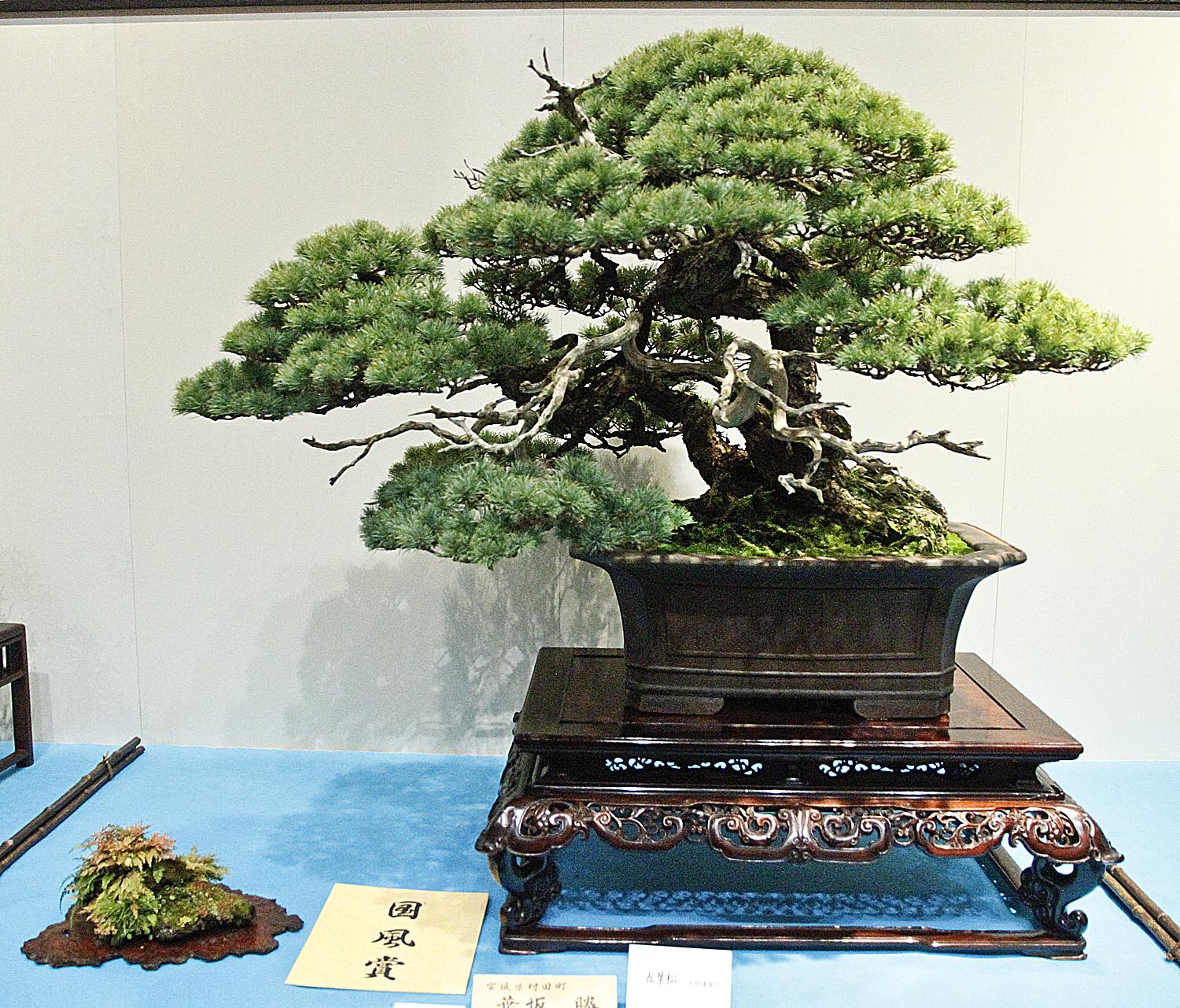
In a club show the tree is only part of the work. The pot, the stand, the accent planting, and the empty space around them are judged together - composition, not just horticulture.
That total view, borrowed from Japanese exhibition practice and held up at every meeting, is what pulled Southern California bonsai toward the level it reaches today.
