He wrote it down
Bonsai Techniques I and II turned hard-won studio knowledge into books students could keep on the bench. They remain standard references decades on.
More than any single tree, John Yoshio Naka gave American bonsai a way of thinking - and a generosity that turned a private hobby into a public art.
Naka was Issei by circumstance and Nisei by birth - born in Colorado in 1914, raised partly in Japan, and back in the United States as a young man. He came to bonsai through his grandfather's trees and arrived in Los Angeles after the war, where he worked, taught, and quietly built the foundation of a West Coast scene.
What set him apart was not only skill but temperament. He treated students as collaborators, answered questions for hours, and refused to guard technique as a trade secret. His view was that a tree, like a lesson, only matters if it outlives you - so he gave both away freely.
That openness made him the bridge between a largely Japanese American craft and a broad American public. By the time of his death in 2004, he had taught across the country and abroad, and a generation of teachers traced their own lineage back to his workbench.
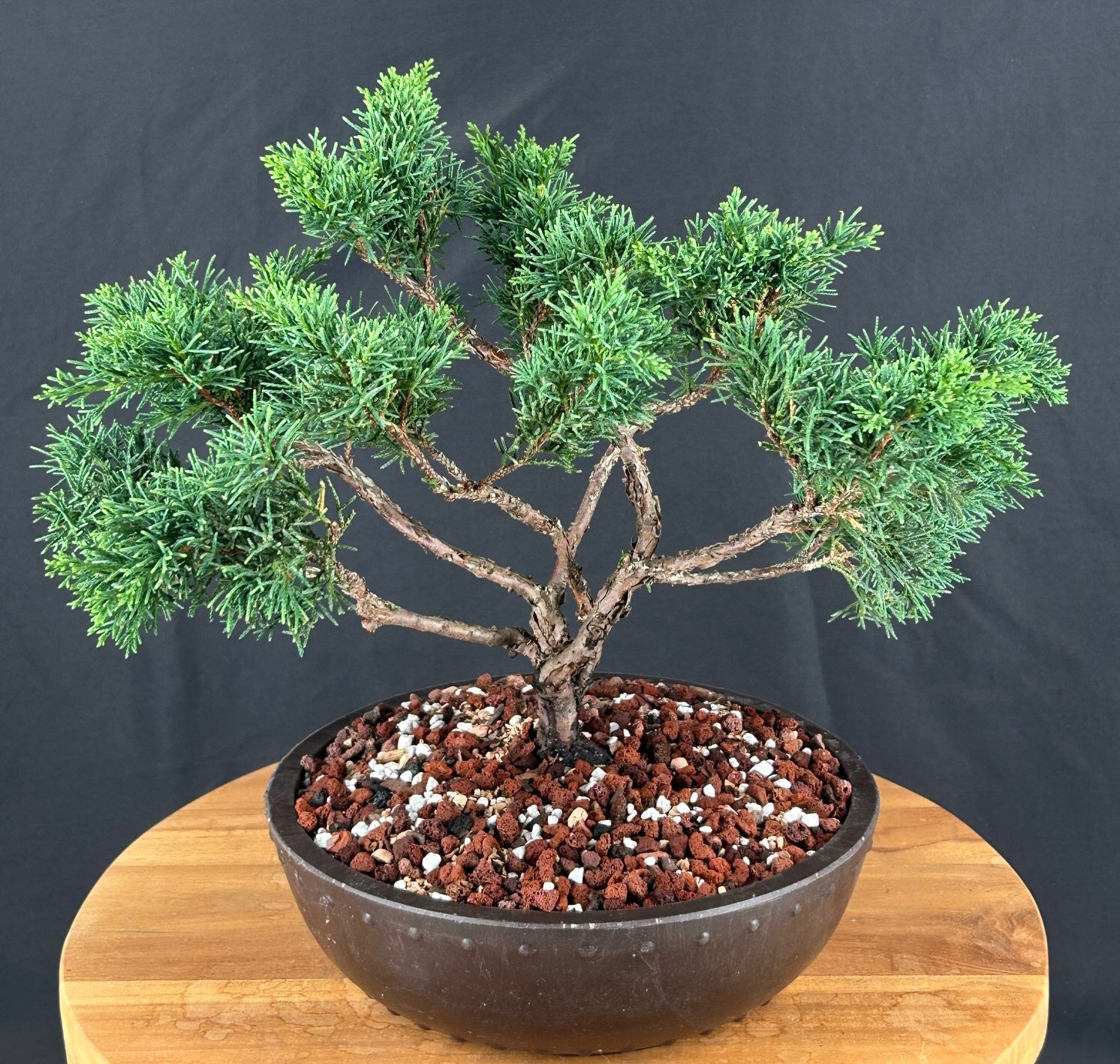

Naka began 'Goshin' in 1948 with a single foemina juniper and grew it, over decades, into a forest of eleven trees. He named it "protector of the spirit," and said the eleven trunks stood for his eleven grandchildren.
In 1984 he donated it to the National Bonsai & Penjing Museum at the U.S. National Arboretum in Washington, D.C., where it is still displayed and maintained. It is among the most recognized bonsai in the world, and the clearest proof that a Southern California grower could speak to the whole country.
Bonsai Techniques I and II turned hard-won studio knowledge into books students could keep on the bench. They remain standard references decades on.
Demonstrations and workshops across the U.S., Europe, and beyond carried a Southern California approach far past the freeways of Los Angeles.
Donating Goshin to the nation set a tone: the best trees belong in public, where the next grower can study them up close.